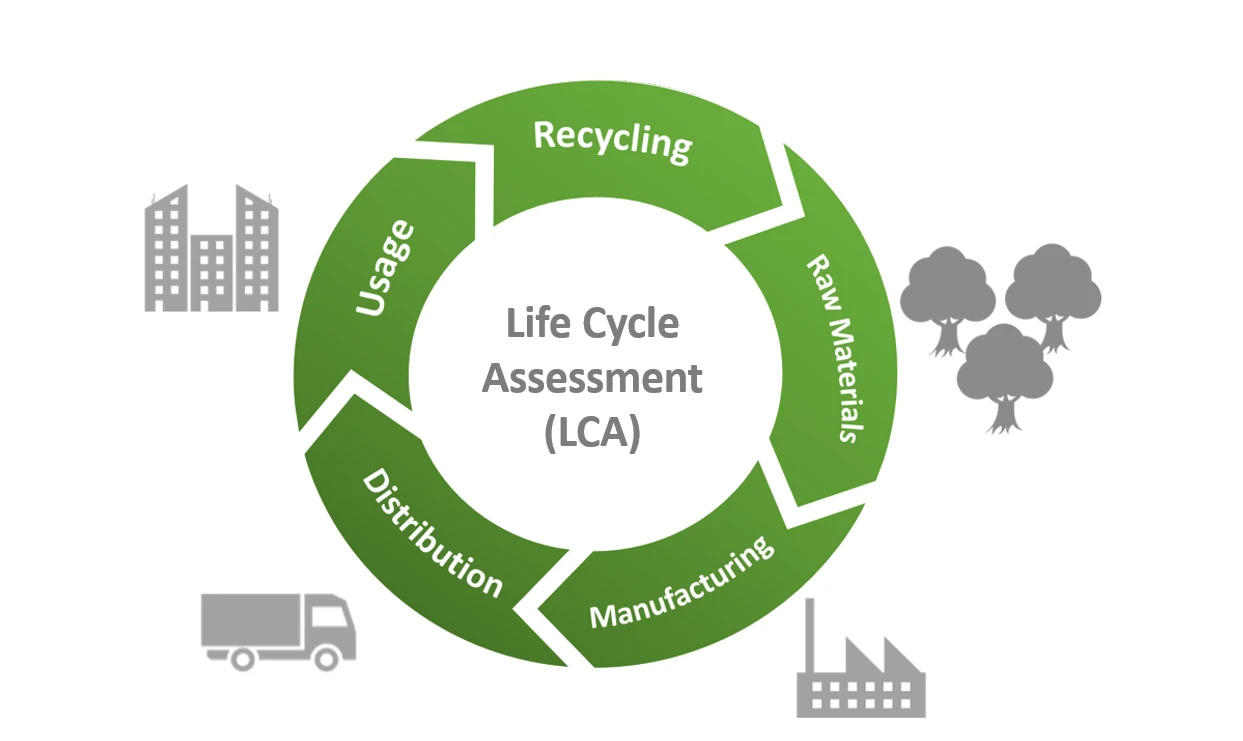
Life Cycle Assessment (LCA) examines the environmental aspects and possible impacts, such as resource consumption and environmental consequences of emissions, across every stage of a product's or process's life cycle.
This encompasses everything from acquiring raw materials to production, utilization, end-of-life management, recycling, and ultimate disposal, essentially covering the entire lifespan from inception to disposal (commonly referred to as "cradle-to-grave").
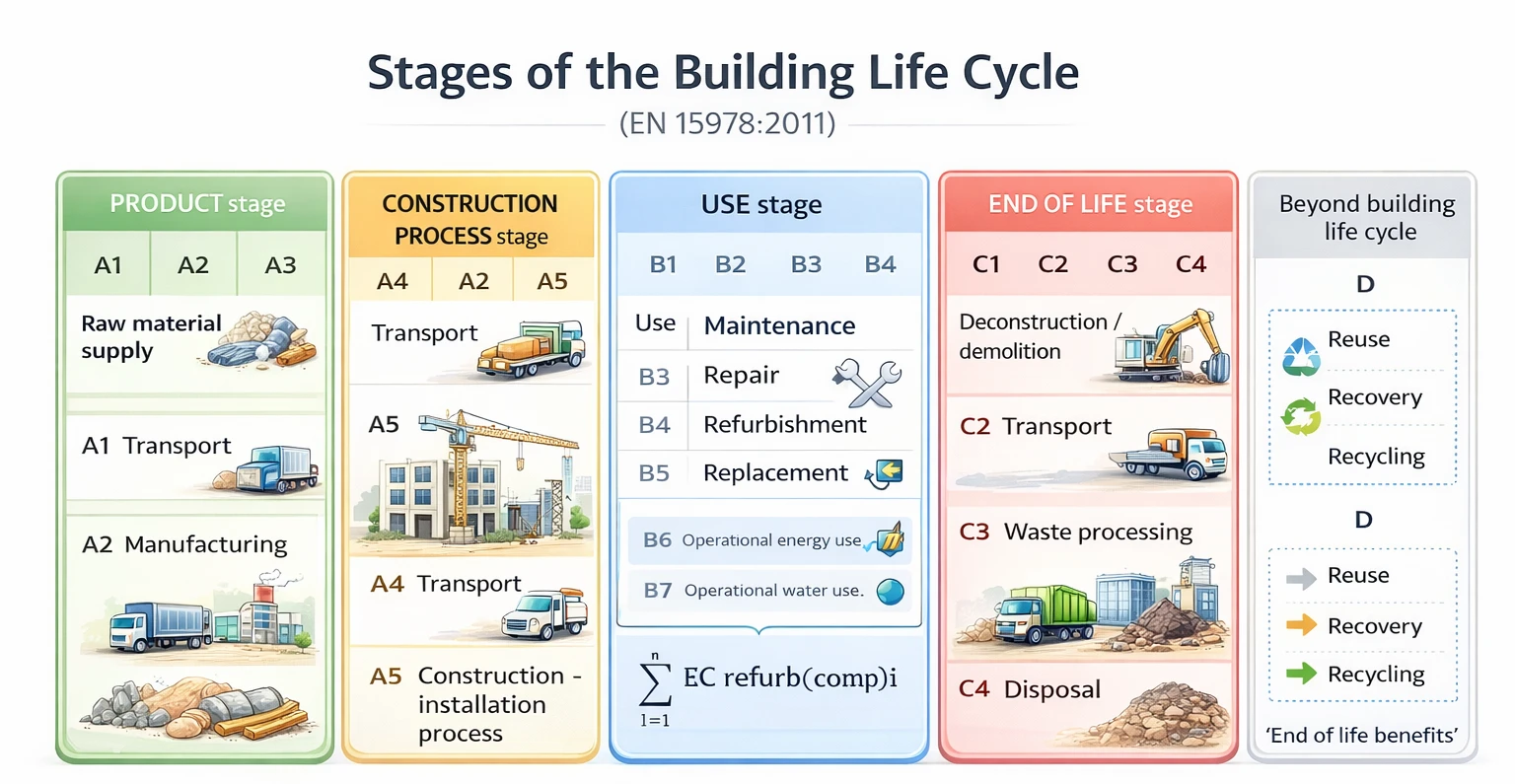
Understanding the LCA Process
According to your specific needs and set goals, specialists can offer you a detailed environmental impact report of your project and the carbon footprint associated with all the stages (Cradle-to-grave).
The Cradle-to-Grave Approach
The cradle-to-grave methodology includes:
- Raw Material Extraction - Mining, harvesting, and processing of base materials
- Manufacturing - Production of building materials and components
- Transportation - Delivery of materials to construction sites
- Construction - Building assembly and installation processes
- Operational Use - Energy consumption and maintenance during building lifetime
- End-of-Life - Demolition, recycling, and waste disposal
Why LCA Matters in Construction?
Life Cycle Assessment provides numerous benefits for construction projects:
Key Benefits
- ✅ Demonstrate your commitment to sustainable practices
- ✅ Evaluate and measure the impact of your projects with concrete data
- ✅ Make informed decisions based on environmental performance
- ✅ Higher competitiveness during tenders and better market exposure
- ✅ Add value to your projects through verified sustainability credentials
Competitive Advantages
In today's construction market, LCA provides a significant competitive edge. Projects with documented environmental performance often:
- Win more tenders and contracts
- Attract environmentally conscious clients
- Command premium pricing
- Meet regulatory requirements more easily
- Reduce long-term operational costs
What LCA Services Include?
With LCA experts, you will get an insightful life cycle assessment in the AEC (Architecture, Engineering, Construction) sector according to your objectives. Consultants can accompany you to take the best environmentally friendly decisions and more.
Comprehensive LCA Services
Professional LCA services typically include but are not limited to:
1. Carbon Footprint Assessment
Calculate the carbon footprint of your construction project and provide strategies for reduction. This includes:
- Detailed emission calculations for all project phases
- Identification of carbon hotspots
- Customized offset solutions
- Reduction strategy development
2. Detailed Environmental Reports
Receive comprehensive reports with:
- Environmental impact analysis across all life cycle stages
- Actionable recommendations for improvement
- Step-by-step guidance to minimize negative effects
- Comparison with industry benchmarks
3. LCA-Driven Design Support
Get consultancy and support for design decisions based on LCA data:
- Material selection guidance
- Energy efficiency recommendations
- Waste reduction strategies
- Circular economy approaches
4. Green Building Certifications
Work towards certifications like LEED, BREEAM, or DGNB:
- Expert guidance through LCA requirements for certification
- Documentation preparation and submission support
- Compliance verification
- Optimization strategies to achieve higher certification levels
Understanding LCA Pricing
Pricing for Life Cycle Assessment services depends on several factors:
Key Pricing Factors
- Project scale - Size and scope of the construction project
- Analysis depth - Level of detail required in the assessment
- Project complexity - Technical challenges and unique requirements
- Certification requirements - Specific standards like LEED, BREEAM, or DGNB
- Building size - Total area and number of building components
- Building complexity - Structural systems, MEP integration, special features
Pricing Models
LCA services typically use flexible pricing structures:
- Hourly rates - For consultancy and smaller assessments
- Project-based fees - Fixed pricing for complete LCA studies
- Certification packages - Bundled services for specific certifications
- Retainer agreements - Ongoing support throughout project lifecycle
Getting Started with LCA
Remember that each project is unique, so LCA services can be customized to meet your specific needs. Whether you're pursuing green building certification, responding to client requirements, or proactively improving your environmental performance, Life Cycle Assessment provides the data and insights you need.
Next Steps
To begin your LCA journey:
- Define your goals - Determine what you want to achieve with LCA
- Assess project scope - Identify which phases and components to include
- Consult with experts - Discuss your needs with LCA specialists
- Get detailed pricing - Request customized quotes based on your requirements
- Plan implementation - Develop timeline and milestones for the assessment
Feel free to reach out to LCA consultants for detailed pricing and further discussions about how Life Cycle Assessment can benefit your construction projects.
Conclusion
Life Cycle Assessment is becoming increasingly essential in the construction industry as environmental concerns grow and regulations tighten. By understanding and measuring the environmental impact of buildings from cradle to grave, construction professionals can make better decisions, reduce carbon footprints, and create more sustainable built environments. Whether pursuing certifications or simply improving environmental performance, LCA provides the framework and data needed to build a more sustainable future.