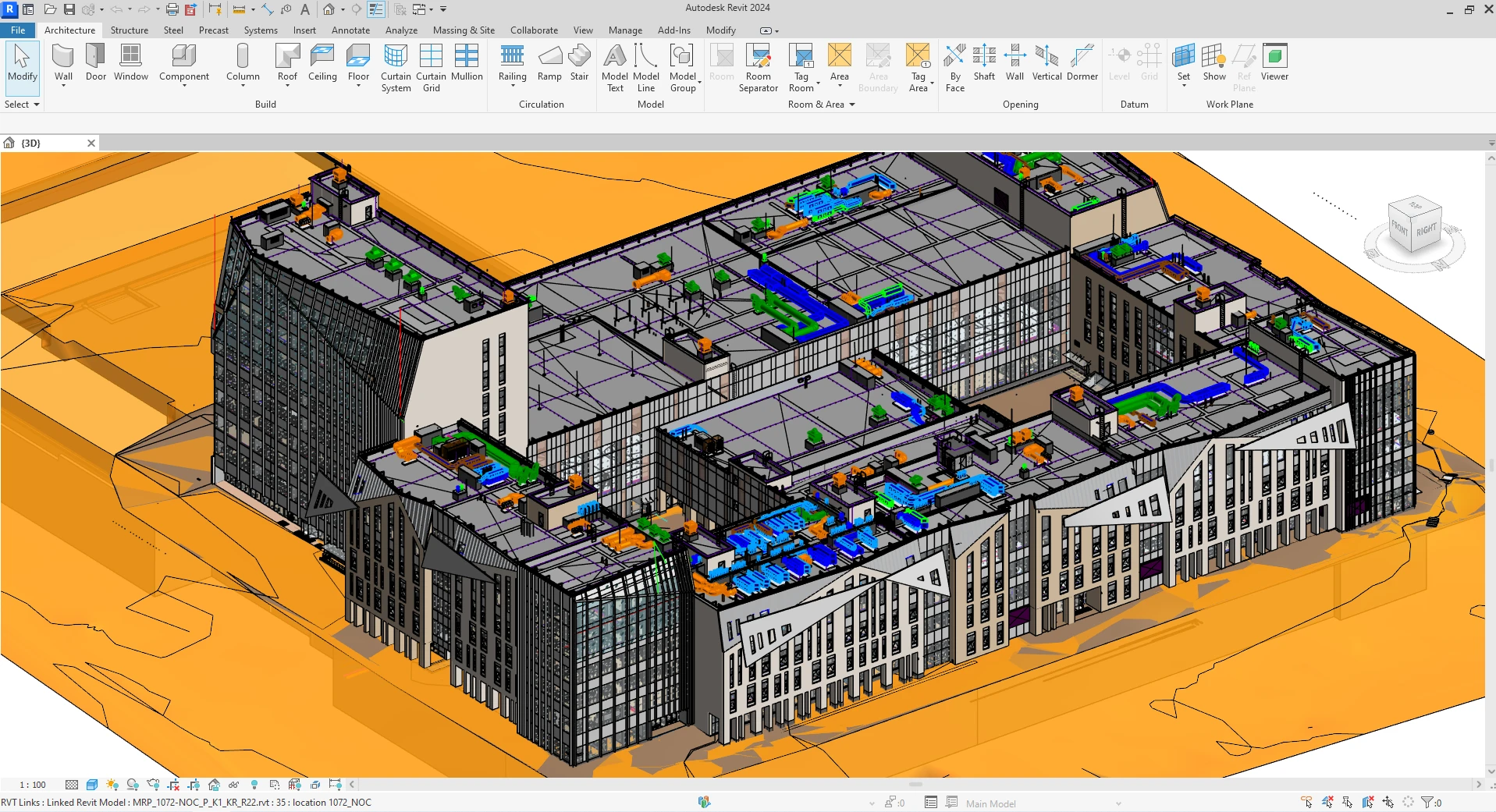
Nowadays, BIM is often implemented for the sake of BIM itself. With fancy models, maximum detail, and the proud phrase: "we have BIM" But for the business, this often brings more pain than gain. The key idea is simple: BIM only makes sense when it is integrated into the company's real business processes and only to the extent the company is ready for.
1. BIM shouldn't break business processes
An overly detailed model isn't always a good thing. If a project needs to go to tender quickly or make a management decision, excessive detail starts to reduce efficiency. The balance between model accuracy, deadlines, and project stage is more important than perfect BIM
2. BIM is a dream
Perfect BIM only exists in presentations. In reality, every project is a compromise between the market, people, and budget. It's important to honestly answer the question: why BIM in this project? For expert review? Tender? Contractor control? Facility management? One project — one level of BIM. There are no universal recipes.
3. External enemies of BIM
Even the most well-thought-out model can be nullified by changes in state standards, new expert requirements, market shifts, and price jumps. That's why BIM must be flexible from the very start, not just maxed out on detail.
4. From model to contract
The real value of BIM appears when quantities go to tender, specifications go into contracts, and the model becomes a tool for controlling the contractor. If BIM doesn't affect money and obligations — it's just 3D.
5. People are more important than software
The main problem with BIM is not Revit or IFC, but overloaded designers, varying skill levels, and no time for training. Technology doesn't help if people don't understand why and how to use it.
6. A qualified client = successful BIM
If the client themselves doesn't understand BIM, they get a complex situation. BIM without a knowledgeable client turns into a formality and conflict.
7. AI + BIM: the first real steps
Artificial intelligence already works for auto-filling equipment lists, checking technical specifications, and analyzing documentation. But for now, these are helper tools, not a magic button.
8. 95% accuracy is still a result
AI can calculate quantities from PDFs and drawings. Yes, not perfectly, but 95% accuracy now is better than 0% automation forever.
9. Proprietary formats are a drag on progress
RVT and even IFC are not well-suited for AI. As long as data is locked up and hard to read — automation will stall.
10. CDE + AI = control, not chaos
The real breakthrough is a Common Data Environment (CDE) with neural networks and automatic checks. When documentation is reviewed before a human even opens it.
Conclusion
BIM is not a goal. BIM is a tool.
It should speed things up, simplify, and reduce risks. Don't do BIM for BIM's sake. Do BIM for the business's sake.


.webp)