Here's the most reasonable objection to BIM that nobody answers properly.
The client doesn't require a model. The tender asks for drawings: plans, sections, details, schedules, delivered as PDF. An AutoCAD seat costs little, your drafters have twenty years of speed in it, and the PDF comes straight out. The BIM alternative: a Revit or Tekla license costing several times more, training time, sometimes a new role on the payroll. And at the end of that more expensive pipeline, what does the client receive?
The same PDF.
Seen from the outside, paying more to produce an identical file looks absurd. If that's your reasoning, it's not resistance to change, it's arithmetic. The problem is that the arithmetic is missing half the numbers.
Same PDF, different factory
The file is identical. What's inside it is not, because the two files are made by completely different factories.
The 2D factory draws every sheet as a separate document. The plan is one file, the section is another, the detail is a third. Nothing connects them except the memory and attention of the person drawing. Quantities are counted by hand, rebar schedules are filled cell by cell, and every revision means finding and editing every sheet the change touches, hoping you found them all.
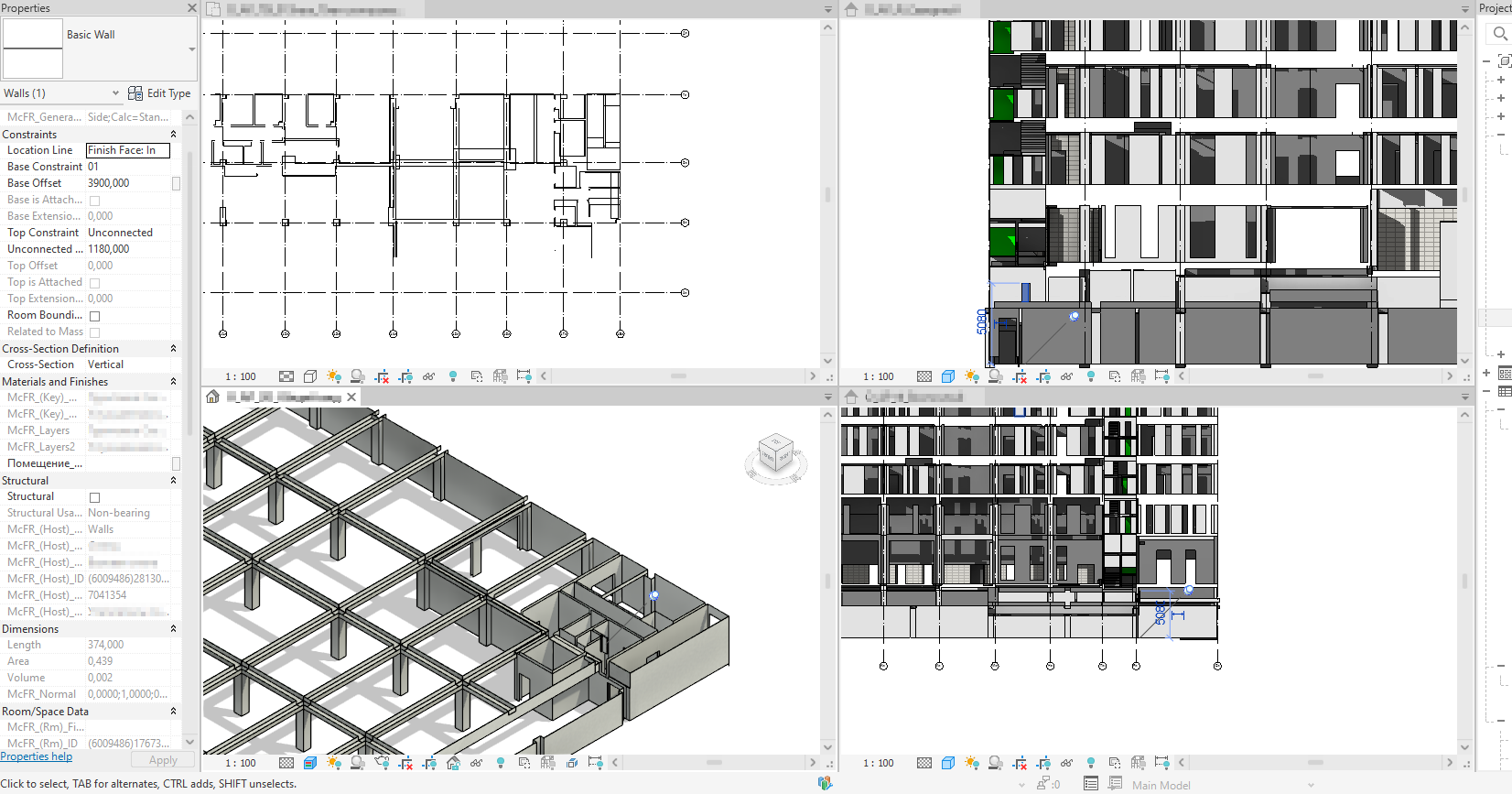
The 3D factory designs the building once, as a model. The plans, sections and details are views of that model: extracted, not redrawn. The schedules and quantities are reports from the model: computed, not counted. A change is made once, in one place, and every sheet and every table updates because there is nothing separate to forget.
The client receives a PDF either way. But one PDF is a set of independent drawings that agree only if humans made no mistakes, and the other is a set of projections of a single object that cannot disagree with each other.
The honest arithmetic, with all the numbers this time
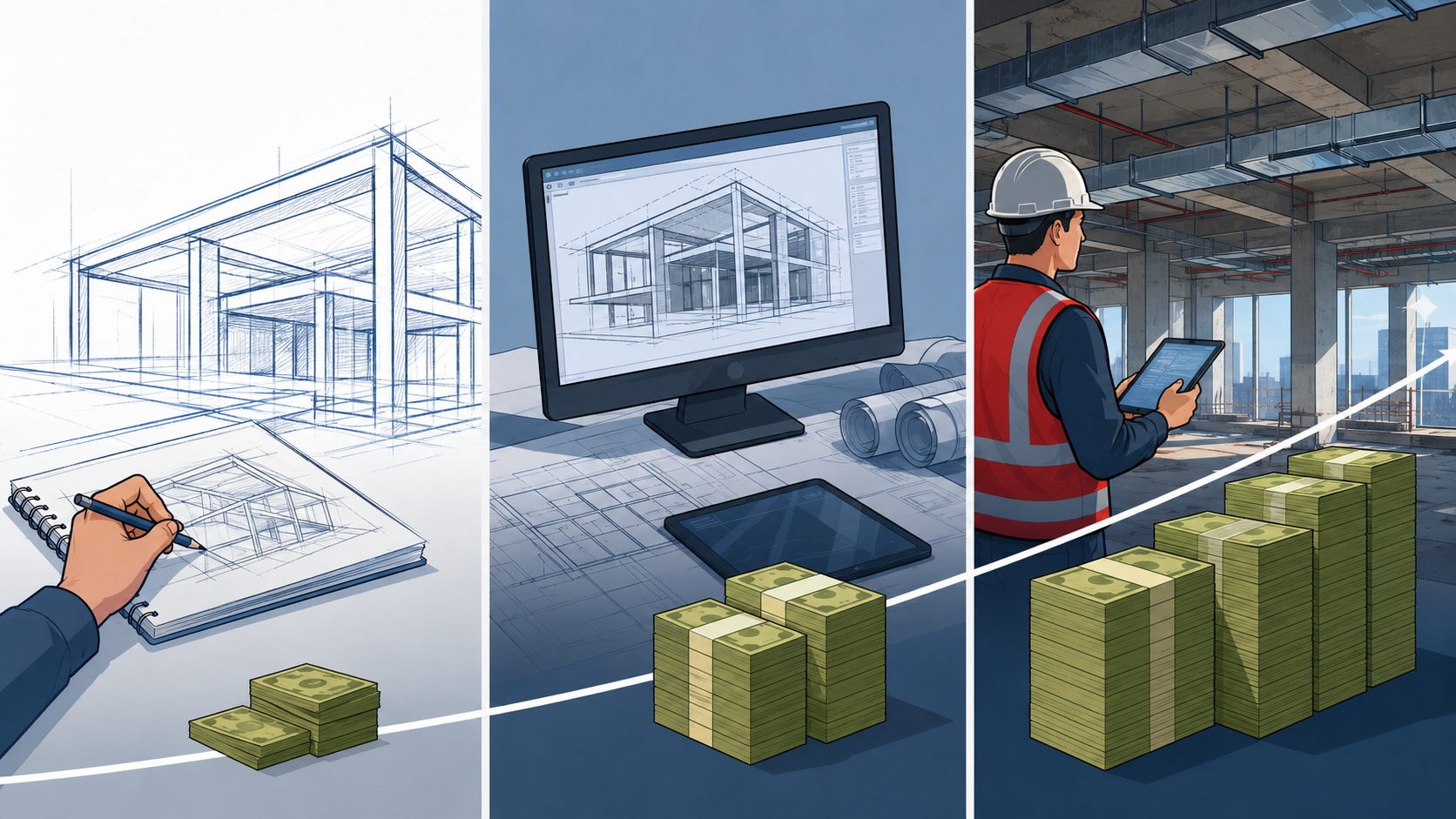
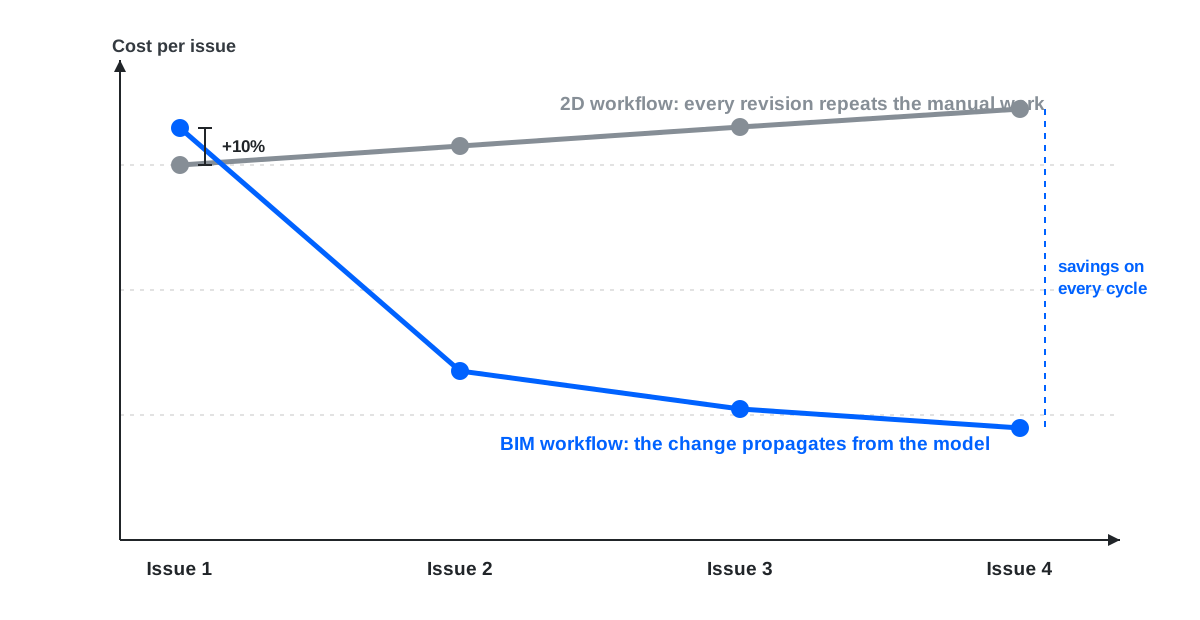
Let's not oversell it. On a first issue, a team working in a modeling tool may well be slower, let's say the documentation takes 10% longer to go out the door. The license really does cost several times an AutoCAD seat. Those are the visible costs, and skeptics count them correctly.
Here's the column they leave out:
The numbers in the deliverable are computed, not counted. Quantities, rebar schedules, steel tonnage, door and finish schedules: extracted from the model, they add up by construction. The category of error that poisons budgets and payment states, the transposed digit, the forgotten axis, the schedule that doesn't match the plan, simply stops existing.
Plan and section cannot contradict each other. They are views of the same object. The classic 2D failure, caught by the contractor at the worst possible moment, is structurally impossible.
Revisions become cheap. And revisions are where documentation time actually goes. Nobody issues once; you issue, the project changes, you issue again. In 2D every cycle repeats the manual hunt across sheets. In a model the change propagates, and the second, third and fourth issues come out fast. The 10% you lost on the first issue comes back with interest by the second.
The model keeps paying after the drawings ship. Clash checking against other specialties, constructability review, data for the next phase. From the same hours you already spent.
So the real comparison is not "cheap PDF vs. expensive PDF". It's: same deliverable, slightly slower first issue, in exchange for deliverables whose numbers are correct by construction and revision cycles that cost a fraction. That's not a cost increase. That's an increase in labor productivity, the engineer produces more verified documentation per month, not less.
You don't need the client to ask for it
This is the part 2D offices get backwards. They wait for tenders to demand BIM, and until then see no reason to move. But the economics above don't depend on the client at all. The client keeps receiving PDFs. You keep the model, the computed schedules, the cheap revisions, the errors that never happened.
Adopting a better factory for your own margin doesn't require anyone's permission. When tenders do start requiring models, and in public projects that direction is only going one way, the offices that moved early will be bidding with a production line they already trust, while everyone else starts their learning curve under deadline.
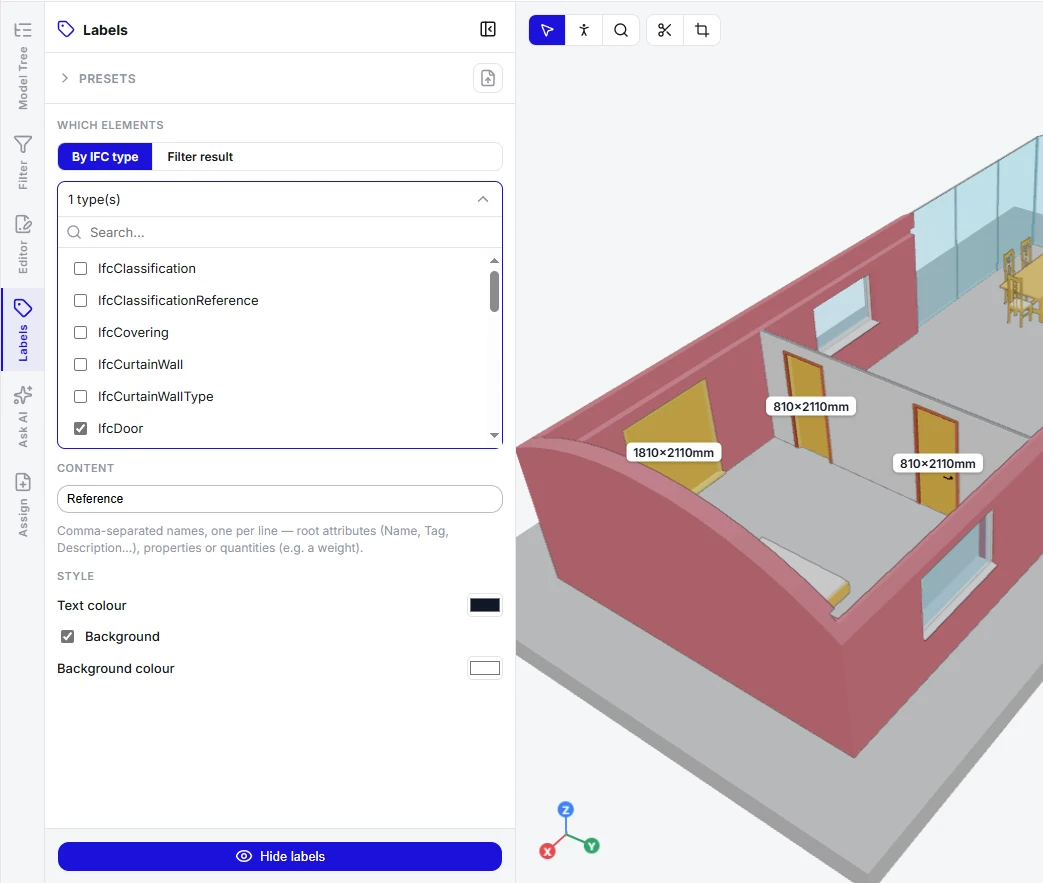
The client asks for a PDF. The question was never the file. It's how much it costs you, error by error, revision by revision, to keep making it the old way. And if the client ever wants to see more than the PDF, that costs nothing either: a free IFC viewer lets them open the model, measure, and check quantities themselves, no license, no training. Ours is free precisely for this